The Best Time of Year for Cycling in Portugal
Spring (March–May) and autumn (September–October) are the best times to cycle in Portugal.
The temperatures are comfortable, the roads are at their quietest, and whether you're pointing your wheels at the Atlantic coast or the wildflower-covered hillsides above Monchique, the conditions are as good as they get.
That said, Portugal rewards year-round cycling more than almost any other European destination - and the reason comes down to geography. Porto in January averages 46°F with regular rain; the Algarve coast that same month sits closer to 61°F and clear skies. The N2 - Portugal's iconic 459-mile national route from Chaves to Faro - crosses five distinct climate zones from north to south.
Where you ride, and when, changes the experience entirely. For a full overview of routes and regions, see our guide on how to plan a cycling trip in Portugal.
Below is a season-by-season breakdown, a regional weather guide, and advice by rider type - covering every route from the Vicentine coast to the Douro Valley, month by month.
TL;DR - When Is the Best Time to Cycle in Portugal?
Spring and autumn are the sweet spots. Here's the quick breakdown:
- Best overall: March–May and September–October
- Best for the Atlantic coast (Porto to Lisbon): April–May and September - ride in the mornings before the Nortada builds
- Best for the Algarve: March–April (wildflowers, warm but not hot) and October–November (quieter roads, golden light)
- Best for the Douro Valley: Late September–October - grape harvest, amber terraces, cooler air
- Best for gravel (Vicentine coast): October–April - dry enough to ride, manageable temperatures, no crowds
- Best for the N2: April–May or late September - 459 miles from north to south; avoid July–August in the interior entirely
- Avoid: July–August on the Algarve road routes and N2 interior sections - we don’t run tours here in August for good reason
Cycling in Portugal in Spring - Best Time to Ride the Algarve and the Atlantic Coast
Months covered: March, April, May
Best for: All riders - the most accessible season across every region
Spring is when Portugal cycling is at its most inviting.
The Algarve hillsides above Monchique are blanketed in wildflowers - yellows, purples, and whites stretching up toward Fóia (2,959 ft) - the highest point in the region. If you want to cycle in the Algarve, temperatures run 61–72°F through March and April: warm enough to ride in kit, cool enough to climb comfortably. The forest above Monchique smells of eucalyptus, and the summit sits 8–10°F cooler than the coast, which means you arrive feeling like you've earned something.
On the Atlantic coast, spring is one of the two recommended Portugal cycling seasons. The Nortada is less established in March and April - by May it starts to build, but still far more manageable than in June or July.
Set off by 8–9am, keep the exposed coastal sections to the morning, and you'll have the rest of the day for seafood on the harbour and the kind of light that makes the Atlantic look almost tropical. Plan your Porto to Lisbon bike tour for April or May and you'll catch the coast at its quietest and most scenic.
The N2 bike tour in spring opens up properly by April. The far northern sections around Chaves can still be cool and wet in March, but from April onward, the conditions across the full 459-mile route are excellent. This is the best time to start a north-to-south staging - you'll have the north at its most manageable and arrive in the warm Algarve just as it's hitting its spring peak.
Caveat: March on the Atlantic coast and in northern Portugal can bring rain. April and May are the most reliable months for cycling in Portugal. If you can only target one spring month, choose April.
Expert tip: Plan layers for early morning starts in spring - the interior of Portugal warms faster than the coast, and a 61°F morning in the Algarve can feel closer to 54°F if you're rolling out before 8am.
Cycling in Portugal in Summer - Northern Portugal and the N2 in Peak Season
Months covered: June, July, August
Best for: Experienced road cyclists targeting northern Portugal; e-bikers with early start plans
Summer is the hottest season in Portugal. The honest answer about the Algarve and southern N2 in August, is that we wouldn’t advise setting off on cycling tours at this time.
Inland temperatures on the N2's southern sections and across the Alentejo plain regularly exceed 95°F. The exposed asphalt has no shade. If you're in the Algarve in August at all, you're a summer holidaymaker who might go for a quick early morning spin, not a cyclist on a tour.
Head north, and summer looks completely different. Northern Portugal - Porto, the Minho, and the upper Douro - is significantly cooler than the south, with temperatures running 64–79°F. The N2's northern third from Chaves down to Coimbra is excellent riding in June and July: quiet roads, green hills, the schist villages of Trás-os-Montes, and long daylight hours with sunset pushing past 9pm.
The Algarve in early summer - June specifically - is still viable for experienced riders with early starts. Coastal rides along the Vicentine coast benefit from Atlantic sea breezes, and the Serra de Monchique is cooler at altitude. Fóia before 10am in June is genuinely achievable. By July, the coastal temperatures are hitting 82–88°F, and the Algarve gravel routes are for experienced, heat-ready riders only.
The Nortada is at its most consistent in summer. On the Atlantic coast, winds can reach 20–30mph on exposed headlands by early afternoon. The rule is simple: ride mornings. The afternoons are for recovery, food, and views - not fighting a coastal headwind.
The Douro Valley in summer is spectacular but unforgiving. The terraced vineyards and schist walls radiate heat in the afternoon. Unless you're on an e-bike with planned early starts and midday rest breaks built in, summer isn't the Douro's season.
Expert tip: In summer, the N2's northern sections are excellent. Chaves to Coimbra in June–July offers green landscapes, quiet roads, and manageable heat. Plan to be off the road by 1pm on warmer days.
Cycling in Portugal in autumn - Douro Harvest Season and the Algarve at Its Best
Months covered: September, October, November
Best for: All riders - the parallel of spring, arguably the finest season for the Algarve and Douro
Aumn is Portugal's other sweet spot - and for many riders, it's the best season of all. September and October bring quieter roads, cooler temperatures, extraordinary light, and one of the most visually spectacular events in European cycling tourism: the Douro Valley grape harvest.
From mid-September to mid-October, the terraced vineyards above the Douro River turn amber, gold, and crimson. The air carries the scent of fermenting grapes. The ridge roads above the river - demanding in any season - have a quality to them in autumn that makes every metre of climbing worth it. If you’re planning on embarking on a cycling tour in the Douro Valley, you should plan for this window.
For route ideas and inspiration, see our guide to the best bike rides in the Douro Valley.
For an Algarve bike tour, October is excellent. The beaches are quieter, the light is lower and warmer, and Algarve cycling conditions are ideal for all-day riding. The Vicentine coast gravel routes are at their absolute best in autumn - the wind drops, the tracks are dry, and you'll see almost no one. This is gravel rider season.
On the Atlantic coast, September is the second of the two recommended best months to cycle from Porto to Lisbon. The Nortada weakens significantly, temperatures are 57–72°F, and summer traffic has thinned. By November, Atlantic weather systems become less predictable, and the north starts to get wet.
For the N2, September–October is optimal for the full route. The interior is no longer dangerously hot, the north has cooled down, and the south remains warm. If you're targeting the full N2 - 459 miles, roughly 32,800 ft of cumulative climbing - autumn is when experienced riders choose to do it.
In the Serra de Monchique, the cork oak forests take on a russet hue in autumn. Temperatures at Fóia are crisp and clear - ideal conditions for the climb. The smell of the forest changes with the season, and the summit views over the Algarve coast carry further in the cleaner autumn air.
Caveat: November in northern Portugal can turn wet and grey. The south stays mild, but daylight hours shorten. Aim for the September–October window if you can.
Cycling in Portugal in Winter - Where It Works and What to Expect
Months covered: December, January, February
Best for: Experienced riders seeking off-season value; Algarve coast specialists
Here's the honest picture of winter cycling in Portugal: the Algarve is genuinely viable, most of the rest isn't.
The Algarve coast averages 54–63°F in January, with up to 300 days of sunshine per year. Coastal rides from Lagos, Sagres, and along the Vicentine coast are absolutely rideable in winter, and the near-empty roads are a genuine pleasure. This is one of Portugal's strongest differentiators as a cycling destination: when the rest of Europe is cold and wet, the Algarve is often clear and mild.
The Serra de Monchique summit can be cold, wet, and misty in winter - 46–55°F with rain is common. We'd be cautious about committing to the Fóia climb from December through February without checking conditions first. That said, winter mornings in Monchique often clear to brilliant sunshine once the mist lifts, and a lucky winter day on Fóia is a memorable ride.
Everywhere else? It’s best to be realistic. Porto averages 100mm of rain in January - the Atlantic coast route isn't a winter proposition. The Douro Valley has cold, misty mornings at 43–55°F and bare vines; the infrastructure is limited. The northern N2 sections are cold and wet. None of these are Love Velo's winter offer.
Who should consider a winter Portugal cycling tour? Experienced riders who want off-season pricing, near-empty roads, and the kind of riding where you can cover 30–40 miles a day on the Algarve coast without seeing another touring cyclist.
Expert tip: Winter on the Algarve coast combines off-season pricing, empty roads, and 61°F sunshine. It's not a compromise - it's a different experience that experienced riders increasingly seek out.
Make An Enquiry
We are the cycling holiday experts.
Whether you're a keen road cyclist, enjoy riding an e-bike or hybrid bike, or want to get your family more active, we have the perfect cycling holiday for you.
Portugal Cycling Weather by Region - What You'll Actually Experience on the Road
Portugal is not one climate. The table below covers what you'll actually feel on the road - because the difference between a 46°F January in Porto and a 61°F January in Sagres is the difference between riding and not riding.
The Nortada in practice:
On the Atlantic coast, the Nortada builds through the afternoon as the land heats up - strongest in summer, least powerful in autumn and early spring.
The rule on the Porto to Lisbon route is simple: ride mornings, off the exposed headlands before 1–2pm. By September–October, the wind eases significantly and afternoon riding on the coast becomes much more comfortable.
The Douro microclimate:
The Douro is a steep schist gorge that traps heat in summer and cold in winter. The temperature differential between the river valley floor and the ridge roads 1,500 ft above can be 10–15°F in either direction.
Pack layers in spring and autumn; in summer, ride early or not at all on the exposed valley sections.
Best Time to Cycle in Portugal by Rider Type
Performance / Road Cyclists — N2 and Serra de Monchique
Best months: April–May and September–October
The N2 is Portugal's great cycling epic - 459 miles from Chaves to Faro, with roughly 32,800 ft of cumulative climbing. It's the third-longest road in the world and crosses Portugal's full climatic range from north to south.
The interior bakes in summer and the north is cold and wet in winter. Spring and autumn give you manageable temperatures across the full length of the route - which is the only time Love Velo recommends attempting it.
The Serra de Monchique - home to Fóia, the Algarve's highest peak at 2,959 ft - climbs best in spring and autumn: cool enough for a sustained effort, clear enough for the views over the Atlantic coast to Cabo de São Vicente.
Fitness benchmark:
The N2 is not a casual ride. Expect 40–75 miles per day across consecutive days, with mountain stages in the north and Monchique. You'll need to be comfortable riding for 4–6 hours at a stretch. If you regularly tackle 3,000–5,000 ft of elevation gain per day, the N2 is very achievable with proper staging.
Love Velo provides full carbon road bikes with Ultegra groupsets and optional DI2 electronic shifting - the right equipment for Portugal's longer climbing days.
Leisure Riders — Porto to Lisbon Atlantic Coast
Best months: April–May and September
The Porto to Lisbon coastal route is the most accessible multi-day tour Love Velo runs in Portugal. The terrain is rolling rather than mountainous, the Atlantic views are exceptional, and the daily stage distances - 30–50 miles - are achievable for any rider who can put in 3–4 hours at a comfortable pace.
Spring and autumn give you the best of it: manageable Nortada winds (especially on morning starts), comfortable temperatures, and quieter roads. In May or September, you'll share the coastal lanes with cyclists, not just holiday traffic.
Expert insight:
The Nortada is real. On exposed Atlantic headlands in May or June afternoons, you may face a 20–25mph headwind. Plan your daily stages to finish before early afternoon. Love Velo's route planning and support logistics are built around exactly this - as are all of our leisure rider cycling tours.
E-Bikers - Douro Valley
Best months: Late September–October (harvest season) and April–May
The Douro Valley demands serious climbing - the ridge roads above the river involve sustained gradients on quiet, narrow lanes through ancient vineyard country. An e-bike cycling tour gives you the freedom to explore the full valley without the gradient acting as a ceiling on the day.
The autumn harvest season is the visual peak: amber vine terraces, the scent of fermenting grapes, the Douro River glinting below. Plan for late September to mid-October and you'll hit it right.
Expert insight:
Summer in the Douro (July–August) is punishing even on an e-bike. Interior temperatures regularly exceed 95°F and the valley traps heat. If you're visiting in summer, plan extremely early starts (7am) and build in long midday breaks. Better yet, just save the Douro for autumn.
Fitness benchmark:
You should be comfortable cycling for 2–4 hours per day on varied terrain. The Douro is not flat, but the e-bike handles it - what matters is enjoying the ride, not surviving it. For more inspiration on where to go, see our guide to the best e-bike trips in Portugal.
Gravel Riders — Vicentine Coast and Algarve Gravel Routes
Best months: October–April (avoiding peak summer)
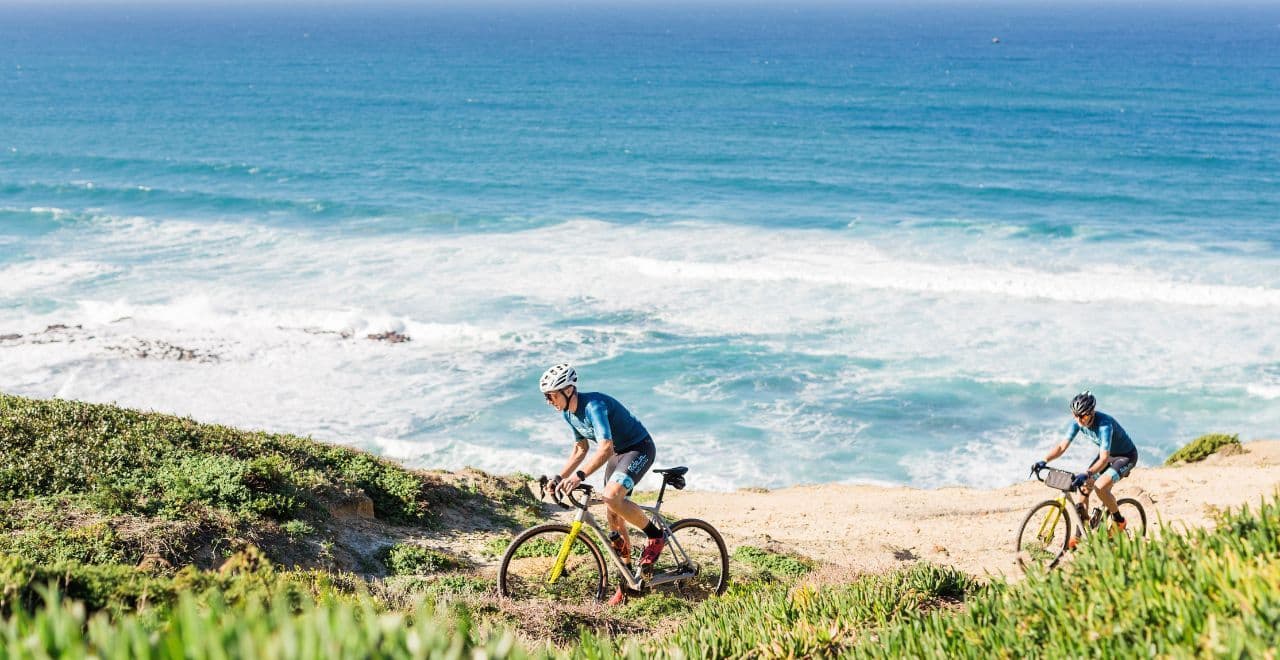
The Vicentine coast is widely regarded as Europe's best gravel cycling route in Portugal - dramatic Atlantic cliff-top tracks, near-total solitude, and a landscape that feels genuinely remote even in a small country.
The trails are best ridden outside summer: autumn through early spring gives you ideal temperatures and the extraordinary Atlantic light, especially around Cabo de São Vicente - the most southwesterly point of mainland Europe.
Expert insight:
Some Vicentine coast tracks involve technical surfaces and remote sections with no support for miles. Gravel-specific bikes are strongly recommended. Solo navigation experience is an asset.
Fitness benchmark:
Comfortable riding 35–55 miles per day on mixed terrain. Expect unpaved tracks, loose gravel, and significant gradients on the coastal cliffs. Mechanically confident riders will enjoy this most.
Ready to Ride? Plan Your Portugal Cycling Tour
Choosing when to cycle in Portugal isn't just about chasing good weather - it's about matching the season to the route and the rider.
Spring wildflowers on the Serra de Monchique. The amber Douro in the grape harvest. The empty Vicentine coast in November. The quiet Algarve coast in January. Each of these is a specific, real experience - not a generic seasonal recommendation.
Portugal rides well year-round for the right rider in the right region. The question is which one you are.
Explore all of our Portugal cycling tours - or get in touch and we'll match your timing, fitness level, and riding goals to the right route.
Make An Enquiry
We are the cycling holiday experts.
Whether you're a keen road cyclist, enjoy riding an e-bike or hybrid bike, or want to get your family more active, we have the perfect cycling holiday for you.
Frequently Asked Questions