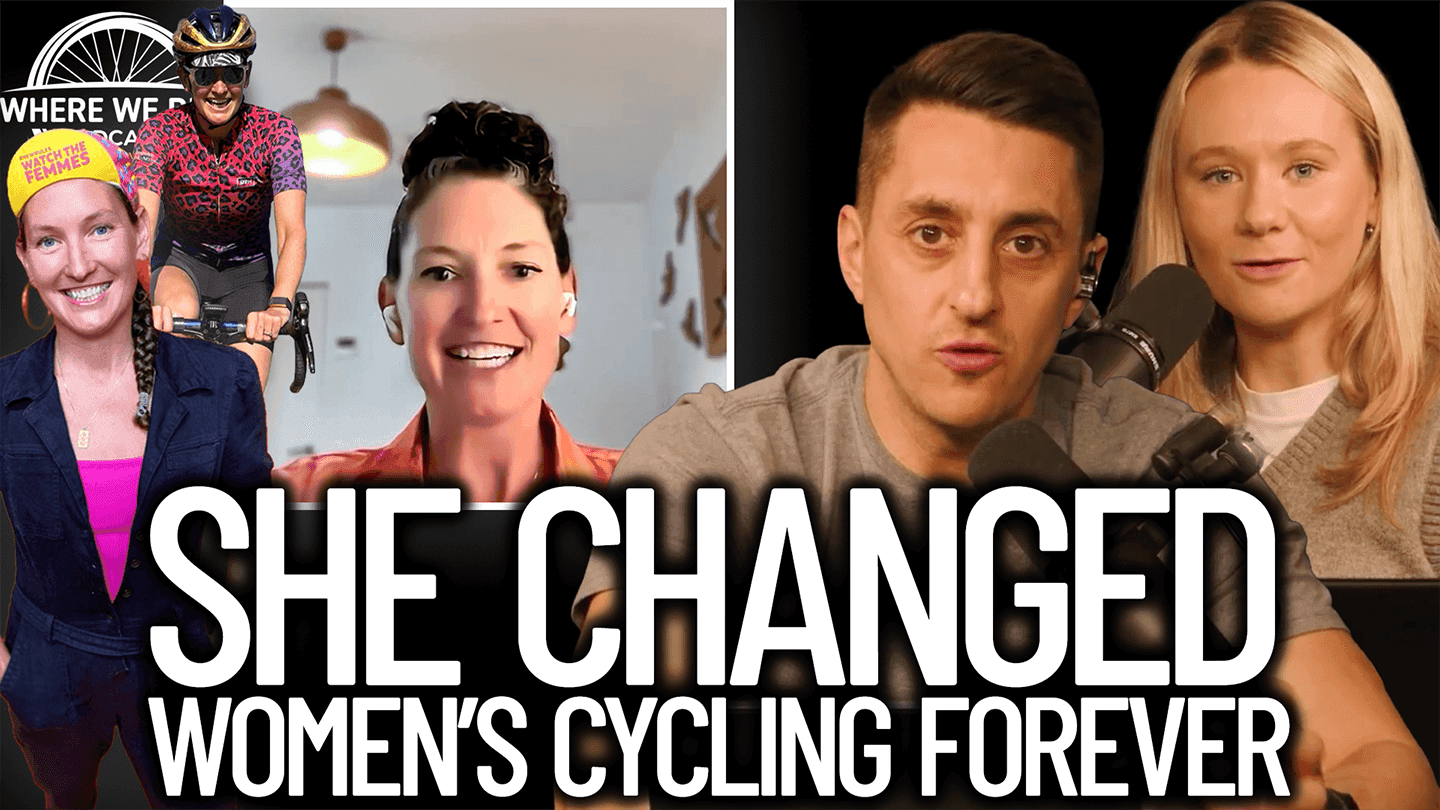
How Kate Veronneau Helped Change Women’s Cycling Forever
Women’s cycling is no longer a niche within the sport. It’s one of the fastest-growing areas in global cycling, attracting record audiences, increased participation, and a new generation of riders inspired by the Tour de France Femmes avec Zwift.
In the latest episode of Where We Ride, hosts Lee and Georgia sit down with Kate Veronneau, Director of Women’s Strategy at Zwift and one of the key figures behind the rise of the Tour de France Femmes avec Zwift.
The conversation explores how women’s cycling transformed from an underrepresented part of the sport into a global movement, and why this moment matters for the future of cycling travel, cycling holidays, bike tours, and the wider cycling industry.
Women’s Cycling Is Experiencing a Global Boom
One of the biggest themes throughout the podcast is the explosive growth of women’s cycling over the last few years.
Kate explains that visibility has completely changed the landscape:
“You have to see it to dream it. You have to see it to be it.”
That visibility is now translating directly into participation.
Following the success of the Tour de France Femmes avec Zwift, racing licences for young girls in Belgium increased fourfold after the success of riders like Lotte Kopecky.
At the same time, audience numbers are soaring:
- 7.7 million people in France watched Pauline Ferrand-Prévot win the Tour de France Femmes final stage last year.
- The race generated 148 million hours watched globally, an increase of 80% year-on-year.
For anyone interested in cycling, cycling travel, or cycling in France, it’s clear that women’s cycling is no longer emerging — it has arrived.
Breaking Down the Barriers Women Face in Cycling
Lee and Georgia discuss something many cyclists already recognise: cycling can still feel intimidating, especially for women entering the sport later in life.
Georgia speaks openly about how overwhelming road cycling environments can feel, particularly in places like London where experienced riders, expensive bikes, and fast-paced group rides can create barriers to entry.
Kate agrees, highlighting several ongoing challenges:
- Safety concerns on busy roads
- The financial cost of getting into cycling
- A lack of welcoming community spaces
- Historically male-dominated bike shops and cycling culture
One of the strongest takeaways from the conversation is that cycling participation often starts with community.
Kate explains that many people only enter cycling because someone “held their hand” during those early stages.
That’s why grassroots cycling communities, women’s rides, cycling holidays, and social bike tours are becoming so important across the UK.
Why Community Is Driving the Growth of Women’s Cycling
Throughout the discussion, both Georgia and Kate return to one recurring idea: women’s cycling thrives because of community.
Unlike some areas of cycling culture that can feel highly competitive or exclusive, women’s cycling is increasingly being shaped around inclusivity, encouragement, and shared experiences.
Georgia explains that more women are now discovering cycling through:
- Social rides
- Women-only cycling clubs
- Cycling communities on social media
- Group rides designed around confidence and enjoyment rather than performance
Kate adds that women naturally want to bring others into the sport:
“I’m having a great time at this. Who else can I introduce to it?”
That mindset is helping fuel a wider movement across cycling, particularly within the UK cycling scene where more women are beginning to see themselves represented both on and off the bike.
How Zwift Helped Transform Women’s Cycling
A major focus of the podcast is the role Zwift played in accelerating the growth of women’s cycling.
Kate explains that from the very beginning, Zwift wanted to create a cycling platform where everyone felt welcome.
Rather than treating women’s cycling as secondary, Zwift built parity into its platform from day one:
- Equal race opportunities
- Equal broadcast coverage
- Equal prize money
- Equal visibility for male and female riders
During the pandemic, this approach became even more important.
When professional racing paused during COVID-19, Zwift and ASO created a virtual Tour de France featuring equal men’s and women’s events.
The result surprised many people:
- The women’s racing attracted huge engagement
- Viewership matched the men’s broadcasts
- Many fans found the women’s racing more exciting and aggressive
That success directly helped launch the modern Tour de France Femmes avec Zwift in 2022.
The Tour de France Femmes Is Changing Cycling Culture
One of the most interesting parts of the conversation is the idea that women’s cycling doesn’t need to copy men’s cycling to succeed.
Kate argues that the women’s Tour de France works because it reflects modern audiences:
- Shorter race formats
- More intense daily racing
- Highly engaging storytelling
- Easier viewing for fans
Georgia even suggests that the Tour de France Femmes can feel more exciting day-to-day because every stage matters.
Instead of needing to follow a three-week race casually, fans are drawn into shorter, action-packed racing where missing a stage means missing key moments.
This modern format is helping women’s cycling connect with newer audiences, especially younger fans discovering cycling through digital platforms, cycling holidays, and bike tours across Europe.
More Women Are Now Shaping the Cycling Industry
Another major highlight from the podcast is how the success of women’s cycling is creating opportunities beyond racing itself.
Kate explains that the Tour de France Femmes has also helped bring more women into:
- Cycling media
- Brand partnerships
- Product development
- Race organisation
- Leadership roles within cycling businesses
That shift matters because it changes how the sport is designed and marketed.
As Kate explains, cycling has historically been built around men, from equipment design to sponsorship decisions.
Now, more women are helping shape:
- Cycling kit
- Saddles and bike fit
- Events and experiences
- Media coverage
- Community programmes
For the wider cycling industry, including cycling travel and cycling holidays in France, this is one of the most important long-term developments discussed in the episode.
Why This Matters for Cycling in the UK
The podcast also touches on the future of cycling in Britain.
With the Tour de France returning to the UK in 2027, both Lee and Georgia describe the excitement building around the event and the opportunity it presents for British cycling.
Kate believes the event could inject fresh energy into UK cycling participation, especially at a time when countries like France, Belgium, and the Netherlands are seeing huge growth in cycling culture and cycling travel.
For UK cyclists, this moment feels significant:
- More women entering cycling
- More inclusive cycling communities
- Greater visibility for female athletes
- More cycling holidays and bike tours designed for women
The momentum behind women’s cycling is now impossible to ignore.
Final Thoughts: A New Era for Women’s Cycling
Kate Veronneau’s impact on cycling extends far beyond one race.
Through Zwift and the Tour de France Femmes avec Zwift, she has helped reshape what modern cycling looks like, who it welcomes, and who gets seen.
For Lee and Georgia, the conversation highlights something much bigger than racing results. It’s about creating a cycling culture where more people feel they belong.
Whether you’re interested in cycling travel, cycling holidays, bike tours, cycling in France, or simply following the Tour de France, this episode captures why women’s cycling is becoming one of the most exciting movements in sport today.
And perhaps most importantly, it shows that when women are given visibility, support, and opportunity, cycling grows for everyone.