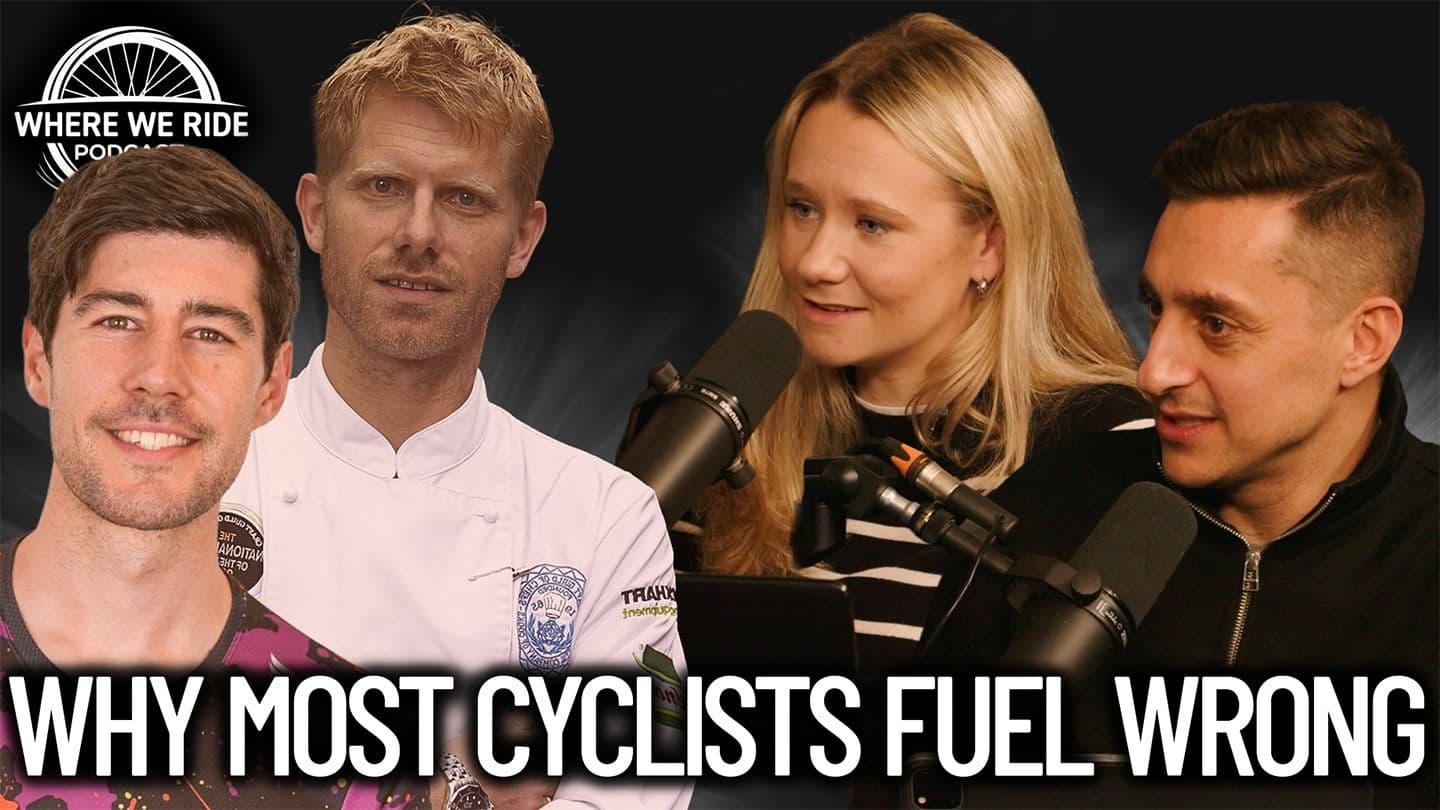
Why Most Cyclists Fuel Wrong
Cycling Nutrition, Hydration & the Truth About Fuelling on the Bike
In the latest episode of Where We Ride, hosts Lee and Georgia dive into one of the most debated topics in cycling: nutrition and hydration in cycling. Joined by Lindsey Hunt from Precision Fuel & Hydration and chef and endurance rider Hayden Groves, the conversation explores how cyclists should fuel, hydrate, and recover, whether you’re racing the Tour de France or riding your local club loop.
The episode blends science, real-world experience, and plenty of cycling stories, covering everything from carb loading and electrolytes to cycling holidays, endurance cycling, and fuelling during long bike tours.
The episode offers practical advice for anyone planning, cycling holidays or bike tours, sportives, multi-day endurance rides or any other type of cycling travel adventure.
Why Cycling Nutrition Has Changed
Georgia reflects on how much cycling nutrition has evolved since her professional racing career began.
“The key to being a good bike rider nowadays is fueling.”
In the past, cycling culture focused heavily on being as light as possible, especially for climbing. But modern sports science now prioritises being properly fueled and strong over simply losing weight.
Professional riders now carefully calculate:
- Carbohydrate intake before and during races
- Recovery nutrition after hard sessions
- Hydration and electrolyte needs
- Fueling strategies for multi-stage events
The result is a completely different approach to endurance cycling than riders followed even ten years ago.
Are Amateur Cyclists Eating Too Many Gels?
One of the biggest myths discussed during the episode is the idea that everyday cyclists should fuel exactly like Tour de France riders.
Lindsey explains that elite riders consume massive amounts of carbohydrates because they burn thousands of calories during racing.
“If they didn’t eat enough during that stage, they’d have to eat much more after.”
But for amateur riders, especially those enjoying cycling holidays, bike tours, or weekend sportives, overloading on gels can actually cause problems.
Hayden recommends a simpler approach:
“Real food as much as possible, and then turn to gels and powders when you need to.”
For many cyclists, this means:
- Using bananas, rice cakes, sandwiches, or bars on longer rides
- Saving gels for intense climbs or hard efforts
- Combining water with carbohydrate drink mix for steady fueling
The discussion highlights how cycling nutrition should match the intensity and duration of your ride, not blindly copy the pros.
The Truth About Electrolytes
Electrolytes are one of the biggest buzzwords in modern cycling, but Lindsey is clear that not everyone needs high-strength electrolyte products every day.
“If a brand is trying to sell you electrolytes that you should be waking up and drinking every morning every day… you should probably have a few questions.”
Electrolytes become important when:
- Riding for more than 60–90 minutes
- Sweating heavily in hot conditions
- Taking part in endurance cycling events
- Riding indoors on turbo trainers
- Completing long cycling travel adventures or bike tours
For shorter rides, water is often enough.
The podcast also explores sweat testing, which measures sodium loss and helps riders personalise hydration strategies, something increasingly popular among endurance cyclists.
Cycling Holidays, Endurance Riding & Fuelling for Big Days
The conversation frequently returns to the realities of long-distance riding.
Hayden, who has completed the Tour 21 seven times, explains how proper fueling becomes critical during multi-day endurance events and cycling holidays across Europe.
Whether climbing iconic mountains in cycling in France or tackling huge rides like Mallorca 312, riders need to balance:
- Carbohydrates for energy
- Hydration for recovery
- Real food for digestion and enjoyment
- Performance nutrition during hard efforts
The Funniest Fueling Story Yet
No cycling nutrition episode would be complete without a few disaster stories.
Georgia shares a story from racing in France where she accidentally poured an entire bottle of carbohydrate drink over herself instead of water.
“It was the stickiest, most horrible thing ever.”
Meanwhile, the group also discusses a rider who stopped during a sportive to eat unrefrigerated pasta from a plastic bag he’d carried in his pocket for 55 kilometres.
The conclusion? Cycling nutrition matters, but maybe avoid sweaty pocket pasta.
Final Thoughts: Fuel Smart, But Enjoy Your Food
One of the best takeaways from the episode is that cycling nutrition doesn’t need to become overwhelming.
Whether you’re training seriously, riding the Tour de France routes, or simply enjoying cycling travel with friends, good fueling should support both performance and enjoyment.
As Hayden explains, the best approach is often the simplest:
- Eat real food where possible
- Use sports nutrition when needed
- Stay hydrated
- Find foods you actually enjoy eating
Because ultimately, cycling should still be enjoyable.