Europe’s Most Natural National Parks Revealed
There's a certain kind of freedom that only comes when you're deep in genuine nature. No beeping horns of frustrated traffic in the distance. No distant orange glow of industry on the horizon.
Just the sound of the wind in the trees, the singing of birds overhead and a landscape that is still how it has always been.
For cyclists, that feeling is everything. It's why we ride.
And while Europe has no shortage of beautiful national parks, not all of them deliver that true sense of wilderness. Some are well-loved to the point of being a little well-worn, and others sit close enough to towns and roads so ‘man-made’ is never far from view.
So we wanted to find out: which European national parks are genuinely the most natural and unspoilt?
And we did. Our team at Love Velo analysed Europe's most popular and well-known national parks against five key factors of naturalness - from the diversity of preserved habitats to the level of artificial light reflecting human activity.
Here's what we found: Europe's national parks that offer genuinely undisturbed landscapes.
Europe's Most Natural National Parks
Key Findings
- Spain ranked strongly overall for the naturalness of its National Parks, with 30% of the top 10 calling the country home: Sierra Nevada (2nd), Cabañeros (4th), and Aigüestortes i Estany de Sant Maurici (6th).
- When it comes to altitude, France and Italy reign supreme. Each country has two national parks with an average elevation above 2,000 metres: France with Vanoise (2,378m) and Écrins (2,056m), and Italy with Gran Paradiso (2,135m) and Stelvio (2,041m).
- Finland's Lemmenjoki National Park records the highest bird species diversity of any park in the study, with an impressive 389 distinct species recorded in its subarctic ecosystem.
- Scandinavian countries dominate when it comes to the size of their National Parks, making up four in the top five, but Greece’s Al National Park gave them a run for their money at 220,000 hectares.
The Five Most Natural National Parks in Europe
#1 Rila National Park, Bulgaria
Bulgaria might not be the first country that springs to mind when you think of natural landscapes, but Rila National Park makes a compelling argument by taking the top spot in our study.
The highest national park in the Balkans, Rila is home to the legendary Seven Rila Lakes, dramatic glacial terrain and ancient pine forests that stretch as far as the eye can see.
It tops our rankings thanks to an impressive combination of natural credentials: 28 preserved habitats, an average elevation of 1,413 metres and a low artificial surface luminance score at just 19.2.
For cyclists, the park offers challenging mountain terrain with routes that wind through natural wilderness.
#2 Sierra Nevada National Park, Spain
Spain's Sierra Nevada brings a significant amount of natural diversity to second place, with 37 preserved habitats (the highest count of any park in the top five) and 207 diverse bird species reported within it.
It is the highest national park and contains the highest point of continental Spain, with an average elevation of 1,176 metres, and offers remarkable naturalness across its 86,200 hectares.
Sierra Nevada also stretches right from Mediterranean scrubland to the snow-capped peak of Mulhacén at 3,479 metres above sea level, which creates an interesting range of landscapes within a single protected area.
At Love Velo, we offer Sierra Nevada cycling trips, and for good reason. For cyclists, the park's gradient offers everything from gentle valley riding to serious high-altitude climbing.
#3 Triglav National Park, Slovenia
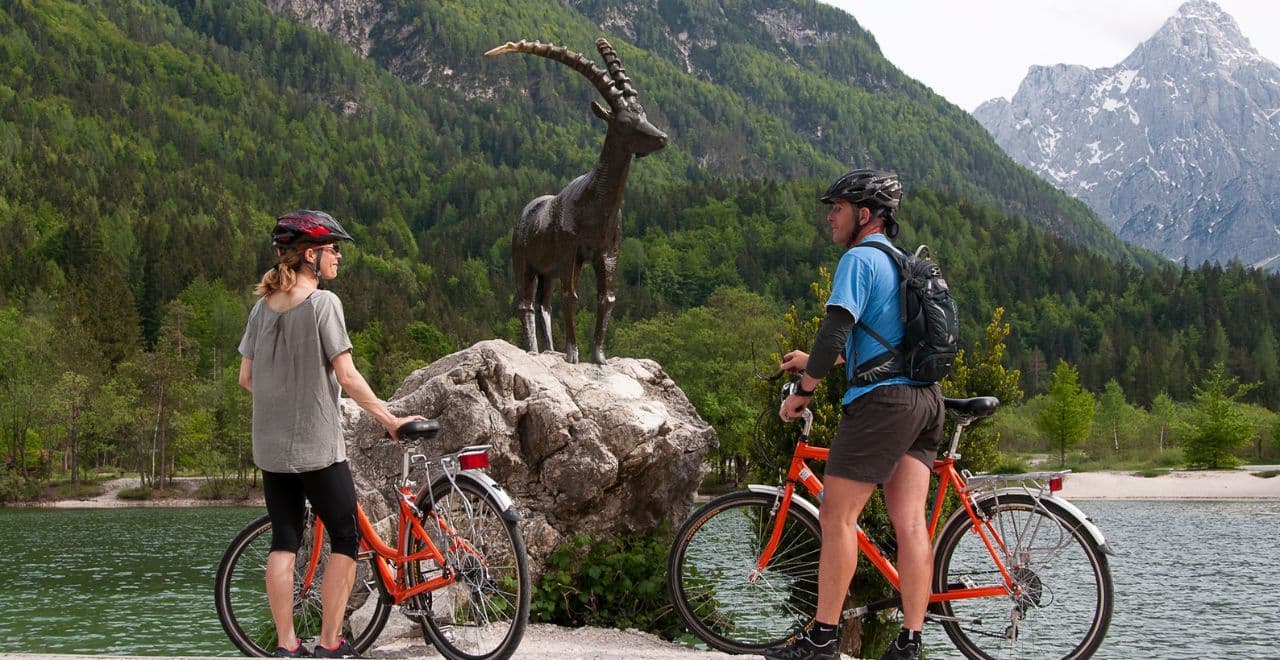
As Slovenia's only national park, Triglav is something pretty special. Named after the country's iconic three-headed peak, the park covers nearly the entire Julian Alps (within Slovenia's borders) to offer 88,000 hectares of limestone peaks, turquoise rivers and ancient beech forests.
It takes third place in our study with 26 preserved habitats, an average elevation of 1,063 metres and an artificial brightness score of just 37.3, meaning the landscape feels genuinely natural still.
For cyclists, Triglav National Park delivers some of the most dramatic road cycling in Europe, which is why we’re seeing more and more people wanting Slovenia cycling trips that encompass the national park. Lake Bohinj is well worth seeing too, a glimmering mirror surrounded by the wild heart of the national park.
#4 Cabañeros National Park, Spain
Back to Spain for fourth place. Although less well-known than its Spanish counterparts, Cabañeros National Park stands its ground when it comes to its natural landscapes.
It ranks highly thanks to its 28 preserved habitats, an impressively low artificial surface luminance score of 15.7 and an extraordinary bird diversity of 221 species (one of the highest in our entire study). Located in Castilla-La Mancha, the vast park of Mediterranean woodland and scrubland is one of the finest remaining examples of its ecosystem type in Europe.
For cyclists, cycling through Cabañeros’ terrain is gentler than the mountain parks above it in the rankings, but the vast, undisturbed nature is every bit as impressive.
Make An Enquiry
We are the cycling holiday experts.
Whether you're a keen road cyclist, enjoy riding an e-bike or hybrid bike, or want to get your family more active, we have the perfect cycling holiday for you.
#5 Hohe Tauern National Park, Austria
Rounding out the top five is Austria's Hohe Tauern, the largest national park in the Alps and one of the largest in all of central Europe.
Its impressive fifth position is a result of having the highest average elevation at 1,710 metres, the lowest artificial brightness score of just 15.6, and the largest size in the top five. At this altitude and this scale, the park feels genuinely vast and genuinely wild.
It covers an enormous 185,600 hectares of high alpine terrain, being home to more than 300 glaciers, over 30 peaks above 3,000 metres, and Austria's highest mountain - the iconic Grossglockner.
For cyclists, the Grossglockner High Alpine Road is a bucket list climb of European cycling, and the wider park offers endless routes through terrain that rewards effort with views of breathtaking scale.
Frequently Asked Questions
Methodology
We compiled a list of 100 of the most popular and well-known national parks in Europe and analysed each against five key factors to determine which are the most natural and unspoilt. The factors were as follows:
- Number of preserved habitats: demonstrating how many unique ecosystems are being protected within the park.
- Size of the park: The larger the park, the more uninterrupted natural landscape you are likely to experience without signs of development.
- Average elevation: Sound does not travel as far at higher elevations, therefore contributing to a greater sense of quiet and separation.
- Artificial surface luminance: Reflecting human activity in the area, such as roads, towns and industry. Number of diverse bird species: Bird song is reported to create a more natural and calming soundscape.
All metrics were combined into a composite natural score, producing a clear ranking from most to least natural. Where there was a tied score, the ranking priority was given to the largest National Park.
Parks, where a complete dataset was not available, were excluded from the study.
Data is correct as of February 2026.