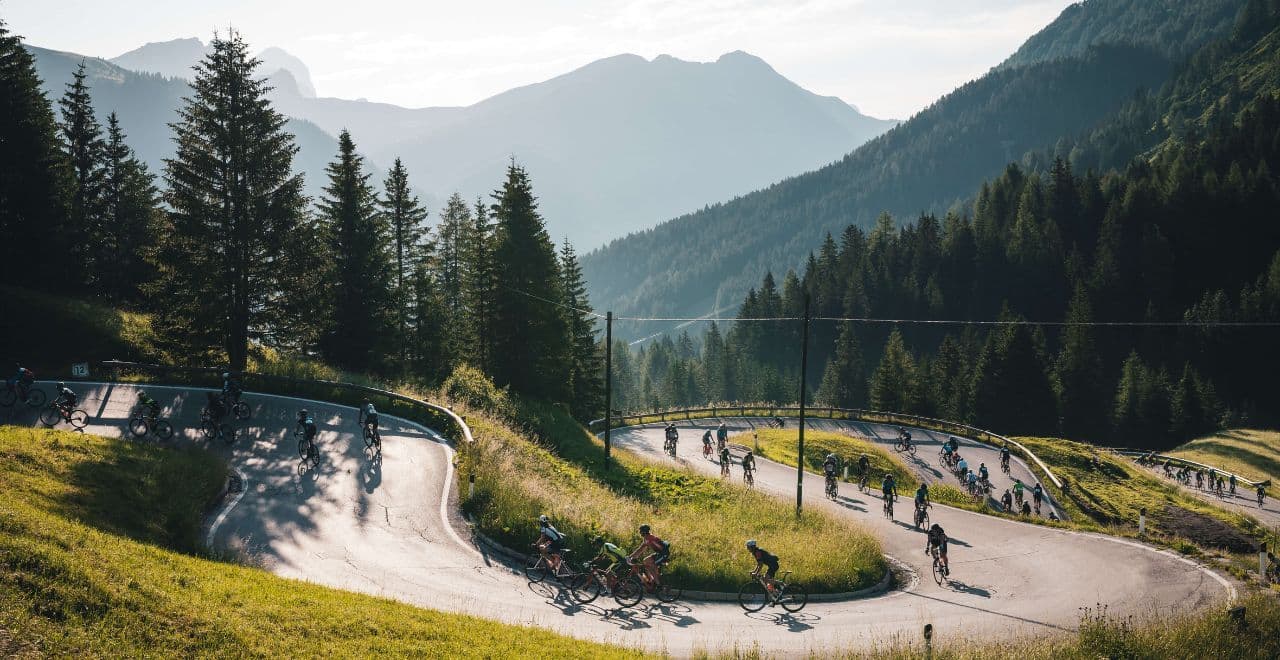
Best Time of Year for Cycling in the Dolomites: When to Go for the Best Weather & Views
TL;DR - Best Time to Cycle in the Dolomites
The best time to cycle in the Dolomites is mid‑June to mid‑September. This is when the mountain passes are usually open, and the weather at altitude is at its most stable, although all mountain areas can be subject to inclement weather.
Early September hits a sweet spot: milder temperatures for climbing, thinner crowds, and calmer conditions before autumn arrives.
In brief:
- Best overall: June - September
- Best for quiet roads: September
- Best for scenery: June (wildflowers) & October (autumn colours)
- Avoid: November - April (due to snow, closed passes, and ski‑season traffic)
Big dates to bear in mind:
- Sella Ronda Bike Day: Closed‑road cycling with no traffic at all in June & September
- Maratona dles Dolomites: First week of July each year - a legendary Gran Fondo through the heart of the mountains
When Is the Best Time to Cycle in the Dolomites?
From June to September, cycling in the Dolomites reaches its prime. Snow retreats from high passes, alpine villages hum with energy, and long daylight hours give you time to climb, descend, and linger over espresso in Corvara or Arabba.
The Dolomites cycling season is shaped by altitude. Valley floors sit around 1,200m, while passes like Passo Sella and Passo Pordoi climb beyond 2,200m. Expect wide swings in temperature - anywhere from 50–77°F depending on elevation and time of day. A sunny start doesn’t always mean a warm summit.
Microclimates add another layer of intrigue: lush Val Badia can feel balmy, while the Gardena pass may still hold a nip of winter. It’s part of the region’s charm - and its challenge. Keep in mind that even in peak season, a storm or cold front can roll in unexpectedly, so it’s wise to check forecasts and ride prepared.
For more on Italy’s broader cycling calendar, see our guide to the best time to visit Italy for a cycling trip.
When to Avoid Cycling in the Dolomites
From November to April, the Dolomites trade bikes for skis. Roads like Giau or Falzarego are closed or under snow, and high‑altitude hotels shut for winter.
Even May can still see lingering snowdrifts, icy corners, or closures. Unless you’re participating in a spring training camp at lower altitudes, May is best spent planning your summer rides rather than attempting them.
Dolomites Cycling Seasons Explained
June – Best for Scenery and Open Roads
June marks the true beginning of the Dolomites cycling season. Most passes reopen by mid‑month, meadows burst with wildflowers, and streams run full from snowmelt. The air feels crisp, carrying that pine‑and‑glacier scent that makes every descent intoxicating.
Temperatures hover around 59–72°F in the valleys, but they’re cooler high up which is ideal for long ascents. Early June also means quieter roads - days when you might crest Passo Gardena with just marmots for company.
If timing allows, plan your trip around Sella Ronda Bike Day in mid‑June: For one day only, the famed Sella loop closes entirely to vehicles. Thousands of seasoned riders join, but the vibe is pure joy, not competition. It’s cycling freedom at its finest.
July & August – Warmest but Busiest Months
By July, summer is in full swing. Alpine pastures blaze green, hotels are buzzing, and every major pass - from Campolongo to Giau - is open. You’ll also encounter the season’s highest temperatures: valley readings can reach 82–84°F, though it stays cooler on exposed ridgelines.
This is prime time for major events like the Maratona dles Dolomites, held the first week of July.
August remains warm but busier, particularly around Italy’s Ferragosto holiday mid‑month. Expect motorbikes, campervans, and day‑trippers on the road. Still, when the morning clouds lift above Passo Sella, few places on earth feel as dramatic.
September – The Best All‑Round Month
September balances reliable access with the first hints of the calm that autumn brings. You’ll still find the best weather conditions in the Dolomites for cycling across most of the month, though showers can be slightly more frequent than earlier in summer.
Crowds thin, temperatures ease to 64–72°F in the valleys, and the air clears after busy high‑season weeks. Visibility also sharpens; you’ll see distant ridgelines etched against cobalt skies.
The Sella Ronda Bike Day returns for one last spin, and riders often say this is the best time to tackle some of our favorite Dolomites cycling climbs.
That said, as villages wind down post‑summer, expect quieter evenings. Some cafés and restaurants begin their off‑season break as locals retreat back to cities, giving roads a peaceful feel.
May & October – Shoulder Season Riding
If you crave solitude and don’t mind uncertainty, May and October can reward you with tranquility.
- May: valleys bloom, fewer tourists, but higher elevations often remain snow‑touched and heavy rain is common.
- October: golden larch forests ignite the slopes, mornings can dip close to freezing, and sunlight has that crisp, cinematic quality photographers chase.
However, both months bring risks. You may encounter snow on high passes like Passo Giau, sudden fog, and limited lodging as resorts shift seasons. These windows suit experienced, weather‑savvy cyclists rather than first‑timers.
With that said, we don't generally recommend riding in the Dolomites after the end of September.
Winter (November–April) – Not Suitable for Cycling
Once November arrives, the Dolomites transform completely. The focus moves to skis and snowboards. Even main valley roads can become icy, and resorts like Arabba or Canazei are closed to cyclists. We suggest saving it for next season.
Weather in the Dolomites for Cycling (What to Expect)
Cycling in these mountains means learning to read the sky. The Dolomites cycling weather belongs to a classic Alpine climate: unpredictable but rewarding.
Temperature by Season
Rainfall and Conditions
Rain falls on roughly 4‑10 days per month, with May typically being the wettest. Summer storms often form late in the day, breaking over southern ridgelines and cooling the air for evening descents. Waterproof layers and good brakes become your best friends.
Altitude Effects
Altitude changes everything. Temperatures drop roughly 3–4°F for every 300m you climb, so ascending from 1,200m in Corvara to 2,200m on Sella means an 18°F drop. Winds on exposed ridges add a chilling edge - especially after sweaty climbs.
The final kilometers of any high pass frequently feel like a different season. One moment you’re in sunshine; the next, a grey mist hovers over the summit. Embrace it - it’s part of what makes cycling in the Dolomites unforgettable.
Best Time for Different Types of Riders
Every rider comes to these mountains for a different reason - whether to chase performance, tick off bucket‑list climbs, or simply marvel at the scenery without traffic stress.
Performance Riders: Sportives & Big Climbs
For those chasing numbers and PBs, June and September deliver the best balance. Roads are open, temperatures are kinder for sustained efforts, and there’s less congestion than midsummer.
Events like the Maratona dles Dolomites make July irresistible for many, but for uninterrupted training or self‑guided challenges, those shoulder months are supreme. Cooler air means you can climb harder for longer, and recover faster with a strudel at the top.
Leisure & First‑Time Riders
If you’re newer to mountain cycling or exploring by e‑bike, June and early September are your allies. Conditions are usually predictable and more forgiving, and you’ll dodge both the peak summer heat and the heaviest tourist traffic.
You might even prefer July or August if cycling isn’t the main focus of your trip but you still want to sample the best weather in the Dolomites - warm days, extended daylight, and the full buzz of alpine life.
That said, the Dolomites are never flat - every route involves serious elevation. Fit leisure riders tend to favor e‑bikes, giving access to the same legendary climbs without collapsing into their coffee later.
A good benchmark is being comfortable riding 60–100km in a day with several long climbs. If you regularly cycle hills and can ride for 3–5 hours, you will likely find the Dolomites challenging but very achievable. Descents can be rapid and technical, so a little handling confidence goes a long way.
Bucket‑List Riders: Iconic Climbs
For riders coming to conquer the legends - Passo Sella, Pordoi, Giau - the best months are July through September. Snow clearance is most reliable, and the mountain roads are fully serviced.
Just remember: even in peak season, nothing in the Alps is guaranteed to be open. A cold snap or late snowfall can still block a pass overnight. Flexibility and a sense of adventure go hand in hand here.
Key Dates and Events to Plan Around
Maratona dles Dolomites – Early July
This is a bucket-list ride to say the least. Thousands of serious riders from around the world take on seven passes - including Campolongo, Pordoi, and Giau - with closed roads and roaring support from locals. Take a look at our guide to the Maratona for an expert insight.
It sells out almost instantly, so early registration is essential. As an official travel operator for the organisers, Love Velo can secure your start‑line place for the Maratona dles Dolomites, but availability is limited, so now’s the moment to lock in your spot.
You can also expect to hear a dedicated discussion on our upcoming Maratona special podcast on Spotify - stay tuned.
Sella Ronda Bike Days – June & September
These twice‑yearly weekends are pure cycling joy: around 60km of traffic‑free Dolomite passes. Riders flow in both directions, sharing smiles, snacks, and views that redefine the word “scenic.”
It’s open to cyclists of all abilities, but that doesn’t mean it’s suitable for every ability level. The event isn’t a race and has no timekeeping, but the loop still covers four significant passes - Sella, Pordoi, Campolongo, and Gardena - about 60m with roughly 1,600m of elevation gain. That’s serious climbing, even with road closures and a relaxed atmosphere.
Dolomites Bike Day – June
The Dolomites Bike Day is a similar concept stretching beyond the Sella loop, linking Passo Campolongo, Falzarego, and Valparola. At 50km, it’s more low‑key, perfect for testing your climbing legs before the main event.
When to Go for the Best Views in the Dolomites
For photographers or anyone who rides for the vistas as much as the gradients, timing is everything.
- June: Meadows explode in greens and purples, streams shimmer, and snow lingers photogenically on ridge tops.
- July–August: Sunsets bring golden tones, but heat haze sometimes mutes distant peaks.
- September: Cleaner air yields razor‑sharp views - ideal for those postcard shots of the Sella Towers glowing at dusk.
- October: Lower slopes turn gold and copper as the larch trees change, delivering beauty even if you can’t climb every summit.
The thing about the Dolomites’ light - especially morning and late afternoon - is its texture. Rock faces shift shades from silver to pink to burnt orange; even veteran riders find themselves pulling over just to stare.
Planning Your Dolomites Cycling Trip
What to Pack
Layers win every time. A gilet, arm and knee warmers, lightweight waterproof, and full‑finger gloves make or break your comfort on long descents. Even mid-summer, it's common for a 68°F valley ride to become below 50°F by the summit.
Bike Setup Tips
Compact gearing (at least 34 × 32) helps manage the relentless gradients of 7‑10 %. Disc brakes add control on 15‑minute descents where rims can overheat, and wider tires (28 mm) take the sting out of rougher alpine asphalt.
E‑road bikes are excellent for mixed groups: everyone enjoys the same scenery without separating on the climbs.
Ready to Ride? Plan Your Dolomites Cycling Holiday
Choosing the best time to cycle in the Dolomites isn’t just about chasing perfect weather - it’s about catching the mountains at their most alive. From the wildflower slopes of June to the golden light of September, every season brings its own rhythm, challenges, and reasons to ride.
The Dolomites are a rite of passage for cyclists: steep climbs, clean mountain air, and views so vivid they hardly seem real. Plan your trip around the right month for you, pack for changing conditions, and you’ll understand why riders return year after year
If you’re ready to tackle these passes at just the right time of year, explore our Dolomites bike tour for routes, bikes, and expert logistics.
Prefer to compare options first? Browse our cycling holidays across Italy and we’ll match your timing to your fitness and travel plans.
Make An Enquiry
We are the cycling holiday experts.
Whether you're a keen road cyclist, enjoy riding an e-bike or hybrid bike, or want to get your family more active, we have the perfect cycling holiday for you.
Frequently Asked Questions