Cycling Sportives in Italy: A Guide to Maratona dles Dolomites
TL;DR – Maratona dles Dolomites Explained
The Maratona dles Dolomites is one of the best closed-road cycling events in Europe, set deep in the UNESCO-listed Italian Dolomites.
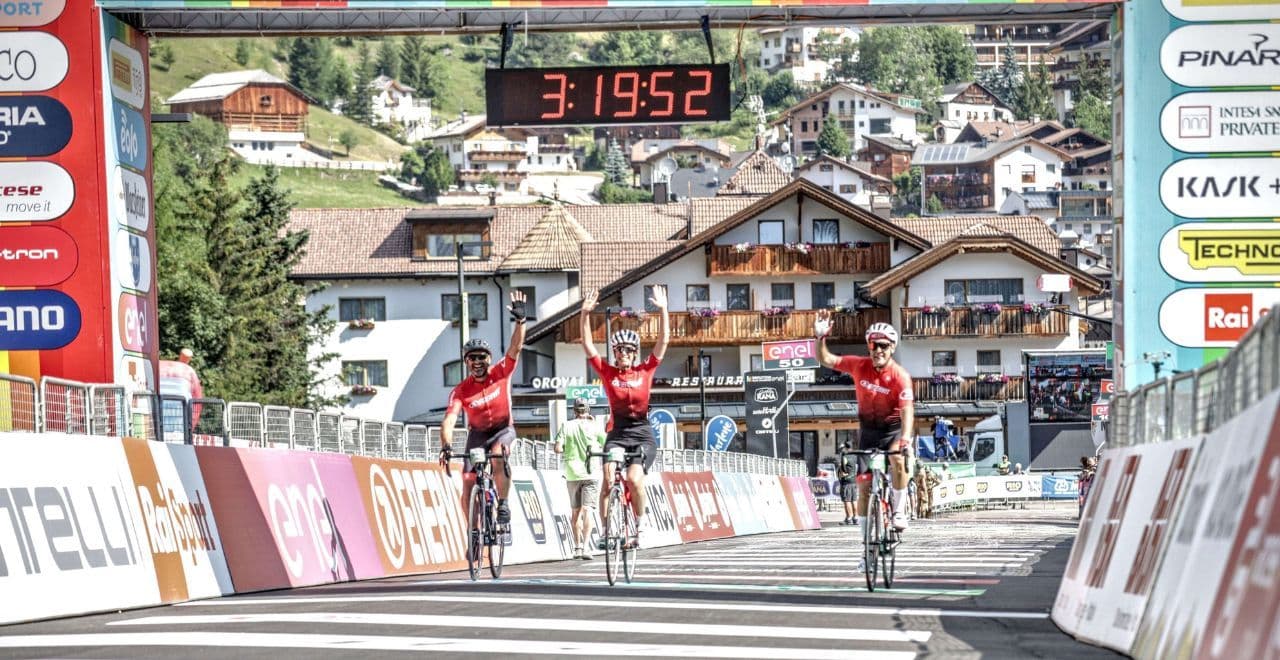
It takes place on the first Sunday of every July, starting from La Villa and finishing in Corvara in the Alta Badia region of northern Italy. You can choose to tackle any of three routes, with up to 4,230 metres of climbing, including iconic passes like Passo Giau and Passo Pordoi.
Key takeaways:
- Location: Corvara / Alta Badia, Dolomites
- Date: First Sunday of July
- Routes: 55km (Sellaronda) | 106km (Medio) | 138km (Maratona)
- Elevation: Up to 4,230 metres of climbing on the full route
- Entry: Via ballot - roughly 1 in 4 get in - or guaranteed through an operator. View our Maratona dles Dolomites packages here.
What is the Maratona dles Dolomites Cycling Sportive?
The Maratona dles Dolomites is a closed-road gran fondo in northern Italy, widely regarded as one of the most prestigious cycling sportives in Italy - and arguably in the world. It's known for high-altitude climbs, technical descents, and some of the most recognisable roads in European cycling.
Key information:
- Start: La Villa
- Finish: Corvara
- Region: Alta Badia, South Tyrol, northern Italy
Why Is It One of the Best Cycling Sportives in Italy?
A few things set it apart.
The route is circular, meaning no long transfers before or after - you finish where you started, and your hotel, your family or friends, your post-ride coffee are all right there. Compare that to the Étape du Tour in France, which often follows a linear stage route and can involve serious logistical juggling.
The event is also run with extraordinary precision. The same route, the same organising framework, the same feed station locations, year after year. When you've done it once, you know exactly what to expect the next time. That reliability matters when you're planning months of training around a single day.
And then there's the landscape. The Dolomites are a UNESCO World Heritage Site. You could be fully focused, riding your best-ever day on the bike, and you'd still find yourself stealing glances at the pale limestone towers rising above the treeline. It's the kind of terrain that makes the challenge feel worthwhile.
If you want to hear more about the Maratona from riders and the team who've been operating this event since 2012, check out our podcast and stay tuned.
Make An Enquiry
We are the cycling holiday experts.
Whether you're a keen road cyclist, enjoy riding an e-bike or hybrid bike, or want to get your family more active, we have the perfect cycling holiday for you.
Maratona dles Dolomites Routes Explained
You can choose between three routes on the day, depending on how your legs feel - a rare flexibility in a major sportive. Most events lock you into your distance weeks in advance. Here, you make the call before the start line.
Maratona Route (138km, 4,230 metres)
Seven major climbs. Then, just when you think you're done, the Cat Wall. That's what the full Maratona gives you, and it's not subtle about it.
The complete route includes Passo Giau as its defining challenge - a climb that reliably separates riders who've paced conservatively from those who haven't. Long sustained gradients, altitude fatigue, limited shelter from the weather. It's demanding in a way that sticks with you, in the best possible sense.
This is the route for experienced climbers who want a benchmark. Something to train for, return to, and measure yourself against.
Medio Route 106km, 3,130 metres)
The Medio cuts out Passo Giau and covers six passes instead of seven, which makes it more manageable - though still a serious day in the saddle. For strong amateur riders who aren't yet ready for the full Maratona, this is the smart choice.
You'll still climb over 3,000 metres and ride through the heart of the Dolomites. It's not a compromise; it's a different challenge.
Sellaronda Route (55km, 1,780 metres)
Don't be fooled by the distance. The Sellaronda covers four passes in a compact loop and offers sustained climbing throughout. In many ways, it's arguably the best 55km ride in the Dolomites - a concentrated hit of everything that makes this region so special.
It's the ideal entry point into Italian cycling sportives if you're newer to gran fondos or simply want to experience the event without committing to the full distance.
Key Climbs in the Maratona dles Dolomites
The Maratona is defined by long, sustained climbing rather than short, explosive efforts. You won't find many punchy 2-minute walls here. Instead, it's about holding a rhythm across hours, managing your effort, and reading your body carefully.
Passo Giau
10km at an average of 9.3%. That's a gradient that demands respect from the very first pedal stroke, and it gets harder psychologically the further into the ride you are before reaching it.
By the time most riders hit Passo Giau on the full Maratona route, they've already covered serious ground. The climb itself offers very little recovery - no false flats, no switchback respite.
There’s also a blanket of silence up there. Thousands of riders, yet all you can hear is the click of gears changing and the sound of breathing. It's where pacing errors from earlier in the ride catch up with you, sometimes brutally.
Passo Pordoi and Passo Sella
Pordoi is 9km at 6.9% - a rhythm climb that rewards steady cadence. Get into your tempo and sit there. Sella is shorter but sharper, with a 7.9% average that catches riders who've let their cadence drop on the descent.
These two climbs come in the first half of the route, before Gardena and a second hit of Campolongo, setting the tone for the day. How you ride them will tell you a lot about how Giau is going to feel.
Passo Gardena and Campolongo
Shorter climbs, but don't dismiss them. They stack fatigue early and they matter. Campolongo is ridden twice over the course of the Maratona route - once in each direction - which means you'll know its corners well by the end.
On the Gardena climb, there's a feed station at Hotel Chalet Gerard. Stop. Grab a piece of strudel. It's the best you'll find in the Dolomites, and that's not a claim we make lightly.
The Cat Wall
Max gradient: 19%. It's short, sharp, and comes late in the ride.
The atmosphere around the Cat Wall is unlike anything else in cycling sportives. Flares, crowds pressed tight on both sides pushing riders on, and a giant evil cat banner waiting at the end. After over 100km of a serious challenge, it's the most alive you'll feel all day.
Expert Insight: What We Know About the Maratona Start (That Most Riders Don't)
Having operated the Maratona dles Dolomites as an official partner since 2012, we've learned a few things that don't make it into the official event guide. The start sets the tone for your entire day - get it wrong and you're playing catch-up before you've even hit the first climb.
First of all, pen allocation matters more than you think:
- Semi-pros go in Pen 1.
- All female riders start in Pen 2.
- The majority of amateur riders are in Pens 2 and 3.
Get to your pen early. All riders begin by cycling uphill, and it creates bottlenecks that can completely disrupt your rhythm if you're caught mid-bunch behind a slower rider.
Stick to the left on the early climbs. If someone clips out in front of you, you'll lose momentum and potentially your desired race pace.
Take warm clothing for the pens. Early mornings in the Dolomites are very cold - arm warmers and a gilet won't cut it. The Love Velo team is positioned on the Campolongo climb, about 10km from the start, to take your warm gear from you. We're also at the 55km mark after the Sella Ronda loop, so you can shed layers or get rid of unwanted items again there if needed.
It might sound like small stuff, but it isn't.
How to Get a Place (And Why It's Not Easy)
Entry to the Maratona is highly competitive. The ballot opens in autumn each year, and roughly one in four applicants secures a place. It's oversubscribed every year without exception.
Entry Options:
- Ballot: Opens in autumn. Plan well ahead and accept that the odds aren't in your favour.
- Guaranteed entry via an operator package: The reliable route in. Places are finite, and operators like ourselves have a direct allocation.
Why Does Using an Operator Make Sense?
Beyond the guaranteed entry, there's the accommodation question. Most hotels in the Alta Badia area don't open their rooms to individual bookings - they give their allocation directly to operators like us.
If you're trying to DIY this trip, you'll quickly find options are sparse, or there will be decent accommodation within easy reach of the start. In addition, the organisers stipulate that accommodation providers must offer a minimum of a 4 night minimum stay. Our trips reflect that but most places actually operate more onerous requirements such as longer stays or mandatory half board.
We've been operating the Maratona as an official partner since 2012. That's a lot of editions, a lot of lessons learned, and a lot of riders who've crossed that finish line in Corvara because the logistics worked.
What Does the Love Velo Package Include?
The Love Velo Maratona package is built around one idea: you focus on the ride, we handle everything else.
What's included:
- 4 nights accommodation near the start (additional nights available on request)
- Airport transfers from Venice
- Guided warm-up ride
- Mechanic support throughout
- Dedicated Love Velo feed station at the 34-mile mark
That feed station matters more than it sounds. Knowing a familiar face is waiting with exactly what you need - at the point where the Sella Ronda loop ends and the real climbing begins - changes the psychology of the day.
Secure your guaranteed entry with a Love Velo package here.
How to Train for the Maratona dles Dolomites
You'll need several months of consistent, climbing-focused training to complete the Maratona comfortably. This isn't a fitness-for-fitness'-sake event - it demands specific preparation.
Where to Focus Your Training
Long endurance rides are the foundation. You need to know what 5 and 6 hours in the saddle feels like, and you need to be comfortable there. Beyond that, climbing intervals are non-negotiable. Sustained efforts at threshold on long gradients - not short punchy hills - are what you're training for.
Back-to-back ride days are also worth building in. Arriving in Alta Badia with tired legs from the previous day, then doing your best on the Maratona, is actually a reasonable simulation of what the event asks.
Key Preparation Tips
- Target days with 1,000m+ of climbing in training
- Practise your fuelling strategy on long rides - don't figure it out on race day
- If you can train at altitude at any point, do it. The air above 2,000 metres is noticeably thinner, and it affects effort in ways that are hard to predict if you haven't experienced it
- Practise pacing on long climbs - not surging, not attacking
What Gearing and Equipment Do You Need?
Proper gearing is essential for the Maratona. Steep gradients at altitude, over long distances, demand a compact setup or lower gearing than you might ride at home.
Recommended Setup
- Compact crankset: 50/34 as a minimum
- Cassette: 32T minimum - a 34T is smarter for Giau, especially late in the ride
- Bike: Lightweight carbon is ideal. Every gram matters over 13,000+ feet of climbing
Weather: What to Wear
Early July is generally stable weather in the Dolomites, but mountain conditions can change fast. At 7,000+ feet above sea level, you can go from warm sunshine to cold clouds in less than half an hour. Check out our weather guide to cycling in the Dolomites for a more in-depth insight.
As we mentioned, the morning start is cold. So you’ll need to start with plenty of layers.
Why us
How Our Cycling Trips Work?

ABTOT protected
Many of our holidays are protected by ABTOT and you can find our bond using membership number 5523.

Trust
Rated Excellent on Trustpilot, 10,000+ Cyclists Travel with Us Yearly.
Exclusive Perks
Free Access to Rewards and Discounts on Top Brands like Garmin, Le Col and Oakley.

Easy Payment
Spread Your Tour Cost Interest-Free.
Maratona dles Dolomites Tips: Pacing, Nutrition, and Race Strategy
The key to finishing strong is pacing conservatively in the early stages and fuelling consistently throughout. Most riders who blow up on the Maratona do so on Giau, and almost always because they rode too hard in the first 80 kilometres.
Start Strategy
Easy first hour. The bottlenecks at the start will naturally slow you down anyway - use that as a gift. Try to resist the surge to chase faster riders when the road opens up.
Climb Efficiently
Ride within your limits. A steady cadence at 80–90 RPM on long climbs is more sustainable than grinding a big gear. Save any surge for the final kilometre of each climb, not the first.
Fuel Consistently
Eat every 30–40 minutes, starting from the gun. Use the feed stations - they're well-stocked and well-positioned. Don't wait until you're hungry. By the time you feel it, you're already behind.
We've got a full podcast episode on fuelling strategy coming in the next few weeks.
Descending
The roads are closed, so use the full width. That said, Italian descenders are fast - pay attention on the technical sections and ride your own line.
How Does the Maratona Compare to Other Cycling Sportives in Europe?
The Maratona stands out for its combination of scenery, closed roads, and sustained climbing. It's one of the best cycling events in Europe for a reason.
The Étape du Tour is an incredible event riding with the pros. However, as it follows a stage of the Tour de France, it’s an unknown quantity each year and so the logistics are often quite cumbersome.
The Mallorca 312 is a distance test more than a climbing challenge, albeit there’s still significant climbing in the first part of the ride.
The Maratona is something else entirely: a concentrated hit of the best Italian cycling climbs, on completely closed roads, in a setting that genuinely takes your breath away (altitude aside).
Why Is Italy One of the Best Countries for Cycling Sportives?
Italy offers something that's hard to replicate elsewhere: the combination of genuinely challenging terrain, a culture that reveres cycling, and food that makes recovery feel like part of the experience.
The Italian cycling climbs are unmatched - from the Dolomites in the north to the Apennines further south. Events here are well-organised, well-attended, and well-loved. And when you roll into Corvara after the Maratona, an espresso and a plate of local pasta feel like they've been waiting for you specially.
That, alongside a heritage that runs from Fausto Coppi to the Giro d'Italia, is why cycling sportives in Italy have a particular gravity that keeps riders coming back.
You can explore all of our Italy cycling tours here if you’re not quite ready to tackle the Maratona, but want to experience the roads, the climbs, and the culture that make Italy the home of cycling.
Is the Maratona dles Dolomites Right for You?
This sportive suits experienced riders who are comfortable with long climbs and significant elevation gain. If you're regularly riding 100 kilometres with significant climbing in training, you're in the right territory.
Ideal Rider Profile
- Strong amateur cyclist
- Comfortable riding 100k kilometres+
- Some experience with sustained climbing and high altitude
- Happy to train specifically for an event for 3–6 months
What if You're Not Quite There Yet?
The Sellaronda route is a genuine option. 55 kilometres of Dolomites cycling, four iconic passes, closed roads. It's arguably the best short Dolomites sportive you can do.
Alternatively, a dedicated training camp in the Dolomites a few months before the event can bridge the gap considerably. We've seen riders transform their climbing on week-long blocks in the mountains. Our Dolomites bike tours are the ideal pre-event training block if that's the route you want to take.
Final Thoughts - Why This Is One of the Best Cycling Sportives in Italy
There are events on the European calendar, and then there are benchmarks. The Maratona dles Dolomites is the latter. It doesn't just test your fitness - it puts you in one of the most extraordinary landscapes on earth, on roads that are all yours, alongside thousands of riders who understand exactly why this matters.
Seven climbs. 4,230 metres. A giant evil cat at the finish. That's the Maratona.
If it's on your list, and it should be, secure your place early with Love Levo.
Make An Enquiry
We are the cycling holiday experts.
Whether you're a keen road cyclist, enjoy riding an e-bike or hybrid bike, or want to get your family more active, we have the perfect cycling holiday for you.
Frequently Asked Questions