The Mallorca 312 Route: What You’ll Ride and How to Prepare
Mallorca 312 Route Description
The Mallorca 312 is widely regarded as one of the toughest amateur cycling events in Europe. Held on the island of Mallorca, it attracts thousands of riders each year looking to test their endurance on world-class roads.
The event offers three route options, each with significant climbing:
- 312 km route: Over 5,000 metres of elevation gain, the ultimate endurance challenge
- 225 km route: 4,000 metres of climbing, ideal for experienced riders
- 167 km route: Over 2,500 metres of elevation, a shorter but still demanding option
A unique feature of the Mallorca 312 is that riders can choose their final distance during the event itself, offering flexibility depending on fitness and conditions on the day.
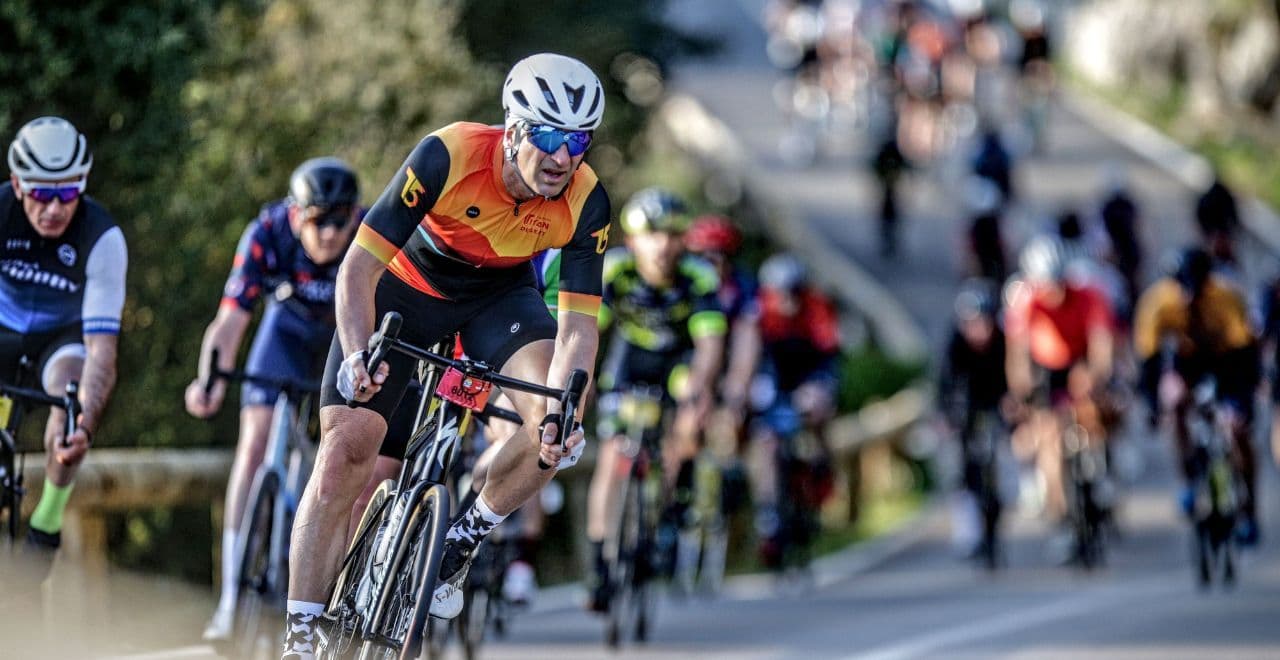
The event has grown to be one of the biggest sportives in Europe. The event takes place in one of the world's most spectacular cycling destinations on completely closed roads. This route takes you along the stunning Tramuntana mountains and through the picturesque towns of Port de Soller and Pollensa.
We are one of the organiser's official tour operators and you can book a trip with us to the Mallorca 312, to include guaranteed race entry, accommodation, transfers and weekend support. If you are looking for a more detailed explanation of the route itself, read on. We hope you find our guide helpful as you prepare for this epic event!
Breakdown of The Mallorca 312 Route
All cyclists begin together in Playa de Muro, in the very north of the island, located on the horseshoe bay of Alcudia. They will all ride through in the Tramuntana mountains and it's not until later in the ride that the routes diverge.
Section 1: Into the Tramuntana Mountains (All 3 Routes Will Ride Through This Section)
One you leave Playa de Muro, you'll enjoy a flat spin along the coast on wide roads. The key here is to get in a train to allow you to ride quickly but conserve energy for what is to come. You'll cross Pollensa bay with the sun rising behind you which provides for shimmering waters as you settle in for a long day in the saddle. You'll turn towards the mountains at Port Pollensa, at which point the road starts to climb as you enter the famed Tramuntana mountains. You'll begin to climb the Col de Femenia and the relatively bunched roads start to thin out as this is the beginning of some serious climbing in Mallorca.
There are almost 5 kilometres of slow cycling as the elevation begins to creep up before the tough part of the climb actually begins. Signs indicate that there are 7.7 km at 5.5% to highest point of Coll de Femenia which is at 519m. The road gets narrower as you continue the climb but the terrain remains excellent as the tarmac is of great quality. You'll experience a few wide 180-degree turns with messages painted on the tarmac, creating an atmosphere of professional racing and this will push you on as you complete the first major climb of the day.
From the summit of the Col de Femenia, you'll ride some smaller ascents and descents before the toughest section of the ride, climbing to the top of Puig Major. Whilst the ride is tough here, it's also spectacular. You'll pass the clear waters of Gorg Blau which look stunning in the early morning sunshine before the steep and tough ascent to the Monnaber Tunnel and the highest point of your ride at 899m.
Section 2: Descent To Soller & Beyond Tramuntana Mountains (All 3 Routes Will Ride Through This Section)
Once you're out the tunnel, you have a spectacular descent to Soller. The route gets more breathtaking from Soller onwards and you will find that the road hugs the coast tighter towards Deia than anywhere else on the island. The climbing continues from Soller as you head up towards Deia and past Valdemossa before the route splits.
Read on to find out what awaits you if you're riding the 312km or 226km routes, or skip ahead 1 paragraph if you're planning on riding the 167km.
Section 3: The MA10- Andratx & The South (Only the 312km and 226km Routes Will Ride Through This Section)
Those riding either the 312km or 226km route will now come to what we think is the most beautiful part of the ride. The MA-10 is well known for the Andratx to Formentor route and this section of the Ma-10 is the undoubted highlight. The road bends around the coast towards Estellencs offering incredible views over the Mediterranean.
Once you are past Estellencs, you will have to navigate 30km of lumpy terrain with short sharp climbs and quick, technical descents, before heading back north at es Capelda, and on towards Esporles.
Once you reach Esporles, you will have clocked up close to 150km, just under half the distance, but well over half the climbing as the toughest sections that make your legs scream will be behind you.
Esporles to Sa Pobla (All 3 Routes Will Ride Through This Section)
Respite comes in the way of some descending out of the Tramuntana foothills and towards the flatlands before heading back towards those foothills, and climbing into Alaro. Once you're through this section most of the tough climbing will be behind you and you'll ride towards towards Campanet and north of Sa Pobla. For those riding the 167km or 225km routes, it's a short ride to the finish line in Playa de Muro. For those riding the 312, read on.
Petra, Arta and the North West (Only the 312km Route Will Ride Through This Section)
Even though it isn't in the mountains, the last third of the event isn't flat and so you need to have some energy left in the tank. In the final stages of the race, nutrition is crucial, so make sure you keep refuelling! This section is also arguably some of the most beautiful riding you can do in Mallorca, outside of the mountains. You'll ride through the fields of Santa Margalida and towards the stunning an historic towns of Petra and Arta. From here, the last push is towards the coastline, through Can Picafort and to the finish line.
How Long Will It Take To Complete?
The ride itself is challenging enough, but there's a 14-hour cut-off, which means you have to maintain an average speed of 22km (14mph).
While this may not sound fast, the route has a serious amount of climbing and will push you to your limit. There should be huge emphasis on getting fuelling right. There are plenty of feed stations en route but you need to ensure you're fuelled well pre and during the event.
Major Climbs Along the Mallorca 312
The 135 km once you've left Pollensa is where you'll tackle most of climbing and it featuries all of the long climbs with a relentless profile that is almost always going up or down, with very little true flat road. Gradients tend to sit around 5–6%, only occasionally rising above 7%, making it more about sustained effort than steep ramps. The key strategy here is to ride at a controlled endurance pace, keeping consistent power on the descents and avoiding unnecessary freewheeling where possible. Unless you’re riding with a group you’ve planned to work with, there’s limited benefit in chasing wheels, as it’s easy to get pulled into riding too hard early on and paying for it later in the event.
Coll De Femenia
In the context of Mallorca 312, the Coll de Femenia is one of the early, decisive climbs that sets the tone for the day, arriving after the opening kilometres from Playa de Muro and acting as the gateway into the Tramuntana mountains. While not the hardest climb of the event, its steady gradients, early placement, and potential for congestion mean it can quickly split groups and punish riders who start too aggressively. The climb begins after a fast, often hectic run through Pollensa, with a gentle lead-in before settling into a consistent rhythm of around 5–7%, with a few sharper ramps. It’s exposed in places, so wind and sun can play a role, but it also offers sweeping views back towards the coast as you gain height. Near the top, the gradient eases slightly before rolling terrain leads towards Lluc and the next key sections of the course. In the 312, pacing here is crucial, riding within yourself on Femenia can make a significant difference later when tackling longer and more demanding climbs like Puig Major, whereas overcooking it early can come back to bite deep into the event.
Puig Major
Puig Major is tackled from the Lluc side, beginning shortly after the town and settling quickly into a long, steady drag along the MA-10. The climb builds gradually as you pass the striking turquoise waters of Gorg Blau, followed by the Embassament de Cúber, with the road tracing the edge of the reservoirs and offering some of the most iconic views of the Tramuntana. Gradients are generally consistent rather than brutal, allowing you to find a rhythm. After the reservoirs, the road begins to kick up more noticeably, with the final kilometres ramping slightly as you leave the open scenery and head towards the Monnàber tunnel. This marks the summit before the transition through to the Sóller side of the mountains.
Coll den Bleda, Coll de Sa Pedrassa and Coll den Claret
These three climbs come in the latter part of the route and, while not as iconic as the first Tramuntana ascents, they can feel deceptively tough after a long day in the saddle. Coll d’en Bleda (226 m) is the first of the trio, a shorter and more rolling climb that eases you back into climbing legs without overly punishing gradients. It’s followed by Coll de sa Pedrassa (450 m), which is longer and more sustained, requiring a steady rhythm as fatigue begins to build. Finally, Coll d’en Claret (550 m) is the highest of the three and often the most demanding, with a more consistent drag that can feel relentless late in the ride. None of these climbs are particularly steep, but ridden in succession and deep into the event, they form a challenging finale where pacing and energy management are key to getting through strongly.
Cut-Off Times and Pacing Strategy
The Mallorca 312 has strict cut-off rules, and if you fall below the minimum pace or are overtaken by the end-of-race vehicle, you’ll be removed from the event, with the option of the broom wagon. For 2026, the 312 km route has an overall time limit of around 14 hours, with the event starting at 6:30am and a final cut-off at 8:40pm, regardless of your actual start time. In practice, this means most riders have just over 14 hours to complete the course, requiring an average speed of about 22 km/h, not accounting for any stops. The shorter routes have a reduced time limit of approximately 10 hours, with a cut-off at 5:00pm.
There are also key intermediate cut-off points to be aware of. At 97 km (around 60 miles), riders on both the 312 and 225 routes must pass by 11:15am, while those on the 167 route have until 11:30am at the 98 km mark. For the full 312 course, there is an additional major cut-off at 220 km (approximately 137 miles), which must be reached by 4:30pm. These time limits are strictly enforced, and riders arriving late will not be allowed to continue. At the 220 km point in particular, barriers are placed across the road and monitored by civil guards to prevent anyone from bypassing the restriction.
Nutrition and Preparation Tips
- Training is key This isn’t an event you can bluff your way through. Solid preparation and time in the saddle are essential if you want to ride strongly and comfortably make the cut-offs. Remember, we are the official travel partners of Rouvy and they have most of the route on their platform. Let us know if you'ev booked with us before and you can get 1 month free on our rewards platform.
- Prep everything the night before Get your kit, nutrition, and bike ready ahead of time so your morning is stress-free. The less you have to think about before the start, the better.
- Prepare for the weather Even in Mallorca, the weather can turn, especially in the mountains. Bring layers to stay warm and dry so you’re not caught out at higher elevations. Make sure you're warm too in the pens as you will be there before dawn - it will be very cold!
- Find a Group Early It’s easy to get swept up in the pace early on, especially with stronger riders around you, but the day is long and the climbs keep coming. We therefore advise that if you can conserve your energy, especially for the first 25km of flat riding, but manage to ride at a decent pace in a group, you won't lose too much time and you'll be ahead of any potnetial slow sections as the climbs start to separate the riders.
- Fuel Early & Consistently Don’t wait for the first feed station to start eating and drinking. Stay on top of your nutrition from the beginning so you can maintain a steady pace and avoid energy dips later in the ride. We think Precision Fuel & Hydration are great and you can even get a sweat test with these guys to tell you exactly how much sodium you lose and need to replace when you ride.
Why us
Why Book With Love Velo?

ABTOT protected
If you book a sportive package with us, you are protected by ABTOT and you can find our bond using membership number 5523.

Trust
Trusted by 450+ Customers on Trustpilot, 10,000+ Cyclists Travel with Us Yearly.
Exclusive Perks
Free Access to Rewards and Discounts across the industry from brands such as Le Col, Garmin and Oakley.

Guaranteed Race Entry
Don't rely on the ballot and guarantee your race entry with us.
GPX Tracks of the 3 Mallorca 312 Routes
Check out the GPX Tracks of the 3 Mallorca 312 routes below
Tips for Planning Your Mallorca 312 Ride- FAQs
Make An Enquiry
We are the cycling holiday experts.
Whether you're a keen road cyclist, enjoy riding an e-bike or hybrid bike, or want to get your family more active, we have the perfect cycling holiday for you.